A Railway Odyssey: Poetic Train Routes Across Mountains and Seas
The rhythmic clatter of wheels against tracks, the ever-changing landscapes unfolding outside panoramic windows, and the unhurried passage of time – these are the hallmarks of railway journeys that transcend mere transportation. In an age obsessed with speed and efficiency, a growing tribe of travelers is rediscovering the meditative pleasure of slow rail travel through China's most poetic routes, where the journey itself becomes the destination.
Where Steel Tracks Meet Celestial Peaks
Southwest China's rugged terrain hides one of the world's most spectacular rail adventures – the Chengdu-Kunming line. This engineering marvel carves through the Hengduan Mountain Range, where Tibetan plateaus collide with Yunnan's forested valleys. The 1,100-kilometer route features 427 tunnels and 991 bridges, including the legendary Jinjiang Bridge that appears to float above clouds during autumn mornings.
What makes this journey extraordinary isn't just the engineering feats, but how the landscape transforms every thirty minutes. Passengers witness Sichuan's misty bamboo forests give way to the fiery red earth of Dongchuan, before entering Yunnan's limestone karst formations. Local farmers still wave at passing trains near Pugetuo Station, where the train slows to navigate spiral loops gaining altitude.
The dining car becomes a moving culinary map, serving mapo tofu in Chengdu's outskirts, crossing into Liangshan where chefs prepare spicy rabbit stew, finally arriving in Kunming with its signature crossing-the-bridge rice noodles. Nightfall brings another magic – stargazing through observation windows as the train climbs to 3,000 meters, far from light pollution.
Coastal Sonata: Where Rails Kiss the Waves
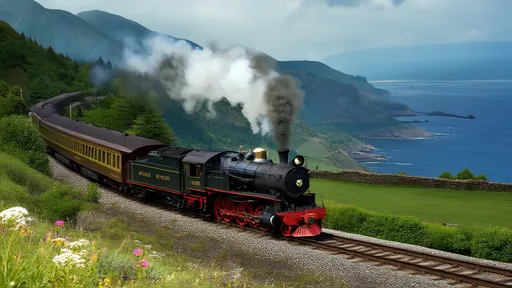
Eastern China's Sanyang-Ningbo line redefines coastal travel with stretches where tracks run mere meters from the East China Sea. The Qiantang River tidal bore creates a natural spectacle each morning, when seawater rushes inland in a standing wave that veteran travelers time their journeys to witness. Between Zhoushan Archipelago's island-hopping bridges, the train seems to skim across ocean surfaces like some modern-day hovercraft.
Fishermen's wooden boats still dot the waters near Shipu Harbor, where the train makes an unscheduled three-minute stop during crab season so conductors can purchase freshly steamed specimens for passengers. This unofficial tradition speaks to the human-scale pleasures that endure on regional routes untouched by high-speed rail.
Architecture enthusiasts note how station designs mirror local maritime heritage – Ningbo's terminal evokes a unfurled fishing net, while Sanmen County's roof mimics overlapping seashells. The route's pièce de résistance comes at sunset near Xiangshan, when golden hour light transforms the mudflats into a shimmering mirror reflecting both train and sky.
The Silk Road Reimagined
Northwest China's Lanzhou-Urumqi line carries travelers through landscapes that inspired Tang Dynasty poets. The Gobi Desert segment features specially designed carriages with UV-filtering windows and humidity controls, creating a comfortable oasis as sand dunes stretch to the horizon. Near Jiayuguan Pass – the Great Wall's western terminus – passengers can spot ancient beacon towers still standing sentinel after centuries.
Modern-day merchants board at Turpan, loading compartments with grapes and Hami melons that perfume entire carriages. The dining car serves hand-pulled noodles that chefs prepare while balancing against the train's motion, a performance as captivating as the scenery. At night, the Milky Way becomes visible with startling clarity above the Dunhuang dunes.
What surprises many travelers is the cultural mosaic along the route. Bilingual announcements in Mandarin and Uyghur give way to Kazakh near the northern stretches, while the landscape shifts from wheat fields to vineyards to desert within hours. The train becomes a microcosm of the region's diversity, where passengers share sunflower seeds and stories across language barriers.
Mountain Spirits and Forest Whispers
The lesser-known Baoshan-Tengchong line in Yunnan proves that some rail journeys require patience – the 132-kilometer trip takes four hours as the train negotiates countless switchbacks. But this slow pace reveals wonders: hillsides that change from tea plantations to primeval forests within minutes, and the occasional glimpse of black gibbons swinging through canopy trees.
Local Bai and Lisu women board at mountain villages selling wild mushroom buns still warm from their steamer baskets. The air itself tells the story of the journey – crisp and pine-scented at higher elevations, then heavy with the earthy aroma of volcanic hot springs as the train descends toward Tengchong's geothermal valley.
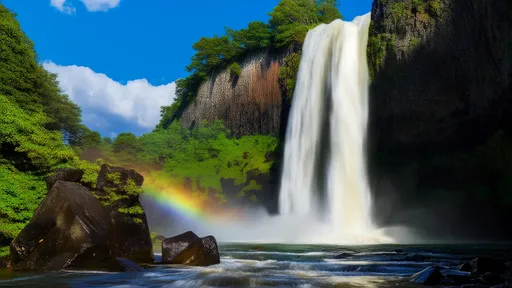
During rainy season, waterfalls appear suddenly along cliff faces, their mist sometimes drifting through open windows. The route's crowning moment comes at Gaoligong Mountain pass, where on clear mornings passengers can see both the Salween and Mekong river valleys simultaneously – a geographic rarity that makes even seasoned travelers catch their breath.
These rail journeys remind us that travel isn't just about covering distances, but about rediscovering the art of perception. In an era of digital distractions, they offer something increasingly rare: uninterrupted time to watch the world unfold at human scale, to witness landscapes transform gradually rather than through quick cuts, and to remember that some of life's most profound moments happen between destinations.