From Overwhelmed to Restful: How Project Management Tools Gave Me Back My Sleep
You know that 2 a.m. loop—tossing, turning, mentally replaying tomorrow’s deadlines, today’s unfinished tasks, next week’s chaos? I lived there for months. My mind wouldn’t shut off because my days had no container. I’d lie there, heart racing, thinking: Did I sign the permission slip? Did I reply to my sister’s text? Is the dentist appointment still on Thursday? It wasn’t anxiety in the clinical sense—just the slow drip of responsibility with no system to hold it. Then I stopped treating productivity apps as just work tools. I started using them to protect my peace. What if the key to better sleep isn’t another meditation app—but finally getting your tasks under control? This is how rethinking project management changed not just my focus, but my rest.
The Nighttime Mental Load No One Talks About
Let’s be honest—most of us don’t lie awake because we’re worried about global events or existential questions. We lie awake because we forgot to schedule the vet appointment. Or because the school fundraiser is tomorrow and the kids’ posters aren’t done. Or because we promised to call our mom and it’s been three days. These aren’t emergencies, but they weigh on us. They pile up like laundry on the back of a chair—small, but impossible to ignore. That’s the mental load: the invisible labor of remembering, planning, and managing. And when it’s unstructured, it doesn’t wait until morning. It shows up at 2 a.m., fully dressed and ready to argue.
I remember one night in particular. I’d been awake for hours, running through a mental checklist: lunchboxes packed? Yes. Birthday gift bought? No. PTA meeting confirmed? Not yet. I felt like a juggler who’d lost track of three balls mid-air. And the worst part? I knew I had the capacity to handle all of it—I just didn’t have a system. I wasn’t lazy. I wasn’t failing. I was just trying to keep everything in my head, and my head wasn’t built for that. Science backs this up: when our brains are overloaded with unfinished tasks, they stay in a state of arousal. The prefrontal cortex, which manages planning and decision-making, keeps firing, even when we’re trying to rest. It’s not about being stressed—it’s about being mentally cluttered.
What changed for me wasn’t a mindset shift alone. It was a practical one. I realized that my sleep wasn’t broken because I cared too much—it was broken because I hadn’t given my care a place to land. I needed a container for all those thoughts, a place outside my head where they could live without haunting me. That’s when I started looking at project management tools not as corporate software, but as emotional relief valves. And honestly? It felt a little silly at first. I associated apps like Trello or Asana with office work, not bedtime. But I was desperate. And sometimes, desperation leads to the best discoveries.
How I Turned a Work Tool Into a Life Organizer
The first time I created a family task board, I laughed. It looked like something out of a tech startup—cards, labels, due dates. But within a week, it stopped feeling strange and started feeling like salvation. I moved my mental load into the app. School forms? Created a card, tagged it “urgent,” set a reminder. Grocery list? Shared with my partner. Weekend chores? Assigned to the kids with playful emojis. Suddenly, I wasn’t carrying everything. I was managing it.
Here’s what I learned: project management tools don’t just organize tasks—they organize peace. When I could see that the dentist appointment was confirmed, the birthday gift was ordered, and the PTA note was sent, my brain stopped checking. It was like giving my mind a bedtime story: “Everything is handled. You can rest now.” And that’s powerful. These tools weren’t designed for family life, but they work beautifully for it. Think about it: a shared calendar isn’t just about avoiding double-booking. It’s about reducing the fear of forgetting. It’s about replacing guilt with clarity.
I started small. One board for home, one for personal goals, one for work. Color-coded labels: red for urgent, yellow for soon, green for whenever. I used checklists within tasks—like “Pack school trip” with sub-items: permission slip, lunch, sweater, bus time. The act of breaking things down made them feel manageable. And the act of completing them? Even better. I began to see my life not as a blur of obligations, but as a series of small, winnable actions. That shift—from overwhelm to agency—was the first step toward better sleep.
And let’s be real: we don’t need more to do. We need fewer things living in our heads. These tools didn’t add to my load—they lifted it. I wasn’t becoming some hyper-efficient robot. I was becoming a calmer, more present version of myself. The kind of mom who remembers the permission slip. The kind of partner who doesn’t snap at small things. The kind of person who can actually enjoy a quiet evening instead of mentally rehearsing tomorrow’s chaos.
Building a Daily Rhythm That Respects Your Energy
Chaos doesn’t just live in our tasks—it lives in our timing. I used to schedule everything back-to-back, then wonder why I was exhausted by 3 p.m. Or I’d leave big tasks for the evening, when my brain was already fried. No wonder I couldn’t sleep. My body was still in “go” mode at 9 p.m. because I’d been in “go” mode since 6 a.m. with no breaks.
That’s when I started using time-blocking in my calendar—not just for meetings, but for everything. I assigned tasks to times of day when I actually had energy. Morning: creative work, planning, big decisions. Afternoon: errands, calls, lighter tasks. Evening: family time, light chores, wind-down. I even blocked 10 minutes after dinner to review the day. This wasn’t about rigid scheduling. It was about honoring my natural rhythm. And it made a huge difference.
I also started using reminders not to do things—but to stop doing them. A notification at 8:30 p.m. that said, “Close the laptop. Breathe.” Another at 9:15: “No more task checking. You’ve done enough.” These weren’t demands. They were invitations to rest. And because they came from a tool I trusted, I listened.
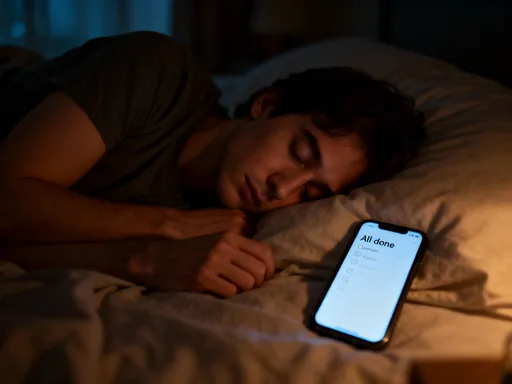
The evening review became sacred. I’d open my task app, scroll through what I’d completed, and just… acknowledge it. Not with fanfare, but with quiet pride. Then I’d look at tomorrow’s plan—already laid out, color-coded, manageable. No surprises. No last-minute panic. And then—this was key—I’d close the app. No more scrolling. No more mental editing. I’d say out loud, “That’s it for today.” And something in my nervous system would relax. The day had an end. The mind had a closing ritual. And sleep? It started to feel possible again.
The Power of “Done” in a World of “To-Do”
We’re obsessed with to-do lists. But here’s the truth: what we really need is a “done” list. There’s something deeply satisfying about checking a box. It’s not just about completion—it’s about closure. When we finish something, even something small, our brain releases a tiny burst of dopamine. It’s nature’s way of saying, “Good job. You can relax now.” But if we never mark things as done, we never get that signal. We just keep adding to the list, and the brain stays on high alert.
So I started celebrating the “done.” Not with champagne, but with awareness. I’d mark a task complete and pause for a second. “I did that.” “I finished the school project with the kids.” “I called my mom.” I even started a simple habit: every night, I’d write down three things I’d completed. Not big achievements—just real, tangible actions. And I’d say them out loud, like a little victory lap. It felt silly at first. But over time, it rewired my brain. Instead of ending the day with a list of what I hadn’t done, I ended it with proof of what I had.
And that changed my sleep. Because now, when my mind wandered at night, it wasn’t just replaying what was left. It was also remembering what was finished. That balance—between progress and peace—is everything. The tools helped me see that. They gave me a visual record of my effort. A digital “I was here, I did this” stamp. And that made it easier to let go.
One night, I realized I’d fallen asleep before my head hit the pillow. Not because I was exhausted—but because I was content. My mind wasn’t racing. It was resting on the quiet certainty that I’d handled what mattered. That’s the power of closure. It’s not about perfection. It’s about presence. And it’s available to all of us—we just need a way to see it.
Sharing the Load: Calm Starts with Connection
Here’s a secret: I didn’t start sleeping better until I stopped trying to do it all alone. The mental load isn’t just about tasks—it’s about ownership. When you feel like everything depends on you, no system can fully relieve the pressure. But when you share the load, the weight gets lighter. Not just practically—but emotionally.
So I invited my partner into the app. I showed him the family board, explained the labels, taught him how to mark things done. At first, he was hesitant. “I don’t want to be managed,” he said. I laughed. “It’s not about managing you. It’s about freeing us both.” And slowly, he started using it. He’d add grocery items. He’d confirm appointments. He’d assign himself tasks. And when he’d send a message—“I’ve got the school pickup”—I’d feel a wave of relief. Not because the task was done, but because I wasn’t alone in remembering it.
With the kids, I made it a game. “Who wants to move the ‘clean room’ card to ‘done’?” They loved it. Suddenly, chores weren’t just nagging—they were achievements. And I wasn’t the only one tracking progress. We were all part of the team.
That sense of shared responsibility changed everything. I wasn’t the only one holding the mental list. I wasn’t the only one feeling guilty when something slipped. We were in it together. And that connection—knowing someone else has your back—does more for sleep than any white noise machine. It’s the difference between lying in bed thinking, “I hope I remembered everything,” and thinking, “We’ve got this.” One is anxiety. The other is peace.
Designing a Digital Routine That Supports Sleep
Now, I’ll be honest: tools can become distractions. I’ve fallen into the trap of checking tasks at 10 p.m., only to spiral into planning mode. So I set boundaries. I turned off non-essential notifications. I switched to dark mode in the evening. I set a “digital curfew”—no work apps after 8:30 p.m. unless it’s urgent. And I created a wind-down routine: close the laptop, open the notebook, jot down any last thoughts, then walk away. The app is there tomorrow. It can wait.
I also learned to use the tools wisely. Not every thought needs a task. Not every idea needs a project. I started filtering: if it can wait, it goes in a “someday” list. If it’s urgent, it gets a due date. If it’s emotional—like “I feel overwhelmed”—I write it in my journal, not the app. The tool is for action, not emotion. And that distinction matters.
I even created a “bedtime ready” checklist in the app: phone on night mode, kids’ bags packed, tomorrow’s outfit laid out, one glass of water on the nightstand. When I complete it, I feel prepared. Not perfect—but ready. And that small sense of order makes it easier to surrender to sleep.
The goal isn’t digital perfection. It’s digital harmony. It’s using technology in a way that serves us, not stresses us. These tools aren’t meant to keep us busy—they’re meant to help us rest. And when we use them with intention, they do.
Sleeping Better, Living Lighter: The Ripple Effect
Here’s what I didn’t expect: better sleep didn’t just give me more energy. It gave me more patience. More joy. More presence. I started noticing small things—the way my daughter laughs when she’s excited, the quiet hum of the house in the morning, the taste of my coffee. I wasn’t just surviving the day. I was living it.
And it all started with a simple shift: moving my tasks out of my head and into a system. I didn’t become superhuman. I became human—more grounded, more balanced, more at peace. The apps didn’t change my life. They gave me back the space to live it.
Because here’s the truth: technology isn’t the enemy of rest. Misused, it can steal our sleep. But used wisely, it can give it back. It can help us feel in control. It can reduce the noise. It can create space for what matters—family, connection, quiet moments, deep breaths.
So if you’re lying awake tonight, running through your mental list, I want you to know: you don’t have to hold it all. You don’t have to remember everything. There’s a better way. Start small. Pick one tool. Create one list. Share one task. Give your mind a break. Because rest isn’t a luxury. It’s a necessity. And sometimes, the most human thing we can do is use a little tech to help us be more human.