I kept swiping but never matched: This hidden setting changed everything
Ever spent hours on dating apps only to feel stuck in a loop of endless swiping with no real connections? You’re not alone. I felt the same—until I discovered a small, overlooked feature that completely transformed my experience. It wasn’t about more profiles or better photos. It was a simple toggle, buried in the settings, that aligned the app with how real relationships begin: through shared moments, not just looks. That one change didn’t just boost my matches—it brought me closer to the kind of connection I’d been hoping for. And the best part? You can do it too, in less than five minutes.
The Frustration of Endless Swiping
Let’s be honest—how many of us have fallen into the swipe trap? You open the app after dinner, just for a few minutes, and suddenly it’s midnight. Your thumb aches, your eyes are tired, and yet… nothing. No messages that spark joy. No conversations that make you smile. Just silence or, worse, the same old “Hey” that goes nowhere. I was there. I’d spend weekends crafting the perfect photo lineup—me hiking, me with my dog, me baking banana bread in an apron that said “Sweet & Salty.” I thought I was doing everything right. But the matches felt hollow. The chats fizzled fast. And the cycle started all over again.
What I didn’t realize at the time was that I wasn’t failing—I was being set up to fail. The app’s default mode encouraged speed, not substance. It rewarded quick decisions based on a split-second glance. And while that might work for finding a weekend fling, it wasn’t helping me find someone who truly got me. I wanted deeper conversations. Shared values. Someone who cared about the little things—like how I take my tea or why I still keep my mom’s recipe box. But the way the app was set up, none of that mattered. It was all about the first impression, the first photo, the first three seconds. And I was tired of it.
That’s when I started wondering: what if the problem wasn’t me? What if it was the way I was using the app? What if there was a way to shift the odds in favor of real connection, not just fast clicks?
What Most People Overlook in Their Settings
Most of us never go beyond the profile screen. We tweak our bio, change a photo, maybe update our location if we’re traveling. But the real magic—the kind that changes how you experience the app—lives in the settings. And not the obvious ones. Not “notifications” or “privacy.” I’m talking about the quiet, almost invisible options that most people scroll past without a second thought.
One of those is the “Slow Mode” or “Intentional Matching” feature—depending on the app you use. It’s not flashy. It’s not advertised. But it’s powerful. When enabled, it changes how matches are suggested. Instead of flooding you with profiles based on proximity and photo appeal, it looks for deeper signals: shared interests, similar lifestyle choices, even how you engage with prompts. Some apps call it “Connection Focus.” Others label it “Meaningful Matches.” But whatever the name, the goal is the same: to help you meet people who might actually want the same kind of relationship you do.
Here’s how it works: instead of showing you hundreds of faces in a day, it limits your daily suggestions. But each one comes with more context—like answers to thoughtful questions, shared hobbies, or mutual friends. It’s like switching from speed dating to a quiet coffee chat with someone who’s already told you they love rainy mornings and old bookstores. The pace slows down. The noise fades. And suddenly, you’re not just swiping—you’re considering.
I know what you might be thinking: “Won’t that mean fewer matches?” Maybe. But here’s the thing—do you really want more matches, or better ones? I’d rather have one real conversation than fifty ghosted messages. And this setting helps you get there.
How One Small Switch Changed My Results
I flipped the switch on a Tuesday night. I was skeptical. I thought, “This won’t make a difference. It’s just another setting.” But by Thursday, something felt different. The profiles I saw weren’t just attractive—they felt familiar. One woman mentioned she volunteers at an animal shelter. Another said he starts every Sunday with pancakes and jazz. These weren’t just facts—they were invitations to connect.
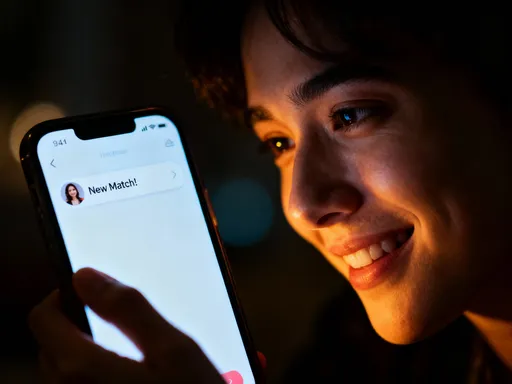
And then it happened. I matched with Sarah. Not because her profile photo was perfect—though it was lovely—but because we’d both answered a prompt about our favorite childhood book. Mine was *The Secret Garden*. Hers was too. That one detail sparked a message: “Did you also pretend you were Mary Lennox in the garden?” And just like that, we were talking. Not about our jobs or where we lived, but about imagination, loneliness, and the books that shaped us. That conversation lasted two hours. And it wasn’t forced. It felt easy. Real.
Since then, I’ve had three first dates—all with people who felt like they actually read my profile, not just glanced at my face. One of them, Mark, is now someone I talk to every Sunday night. We’re not rushing into anything, but there’s a warmth there, a sense of being seen. And it all started with a setting I didn’t even know existed.
The change wasn’t just in my matches. It was in how I felt about the whole process. I wasn’t dreading the app anymore. I wasn’t comparing myself to others or wondering what was “wrong” with me. I felt hopeful. Because for the first time, the app wasn’t working against me—it was working with me.
Why This Feature Actually Works (And Isn’t Just a Gimmick)
You might wonder: is this just a marketing trick? A placebo effect? I asked myself the same thing. But the more I looked into it, the more I realized there’s real psychology behind it. Our brains aren’t built for endless choices. When we’re overwhelmed with options—like hundreds of profiles a day—we stop making thoughtful decisions. We rely on shortcuts: a smile, a beach photo, a six-pack. It’s not shallow; it’s survival. Our minds take the path of least resistance.
But when you slow things down, something shifts. You have time to notice details. You start to care about how someone answers a question about their ideal Saturday or what they’d bring to a desert island. These aren’t trivial—they’re clues to values, humor, and emotional availability. And when the app surfaces people who’ve taken the time to answer thoughtfully, you’re more likely to respond in kind.
Researchers call this “decision fatigue”—and it’s real. One study found that people make worse choices when faced with too many options. In dating apps, that means more impulsive swipes, more shallow matches, and more disappointment. But when you limit the flow and add context, you create space for intention. You’re no longer reacting—you’re choosing.
And here’s another truth: real relationships don’t start with a photo. They start with a moment—a shared laugh, a surprising insight, a feeling of “Oh, you too?” The intentional matching feature doesn’t guarantee love. But it increases the odds of finding that moment. It’s not about algorithms replacing chemistry. It’s about using technology to create better conditions for connection to grow.
How You Can Find and Use It Today
You don’t need to be tech-savvy to make this change. It takes less than five minutes, and you can do it right now, even if you’re reading this on your phone. Open your dating app and go to your settings. Look for words like “Discovery Preferences,” “Match Settings,” or “Relationship Goals.” Different apps use different labels, but they’re usually under your profile or account menu.
Once you’re there, search for options like “Prioritize Meaningful Matches,” “Slow Mode,” or “Intentional Swiping.” If you’re on a platform that asks about your relationship goals—whether you’re looking for something serious, casual, or undefined—make sure you’ve selected the one that truly reflects your heart. That simple choice can influence how the app shows you others—and how others see you.
Some apps also let you adjust how much weight is given to shared interests, lifestyle habits, or even how active someone is in starting conversations. Turn up the importance of “prompt responses” or “detailed profiles” if those matter to you. You’re not just setting preferences—you’re sending a signal to the algorithm: “I’m here for real connection.”
And here’s a pro tip: revisit these settings every few months. Your goals might change. Maybe you’re ready to meet someone serious, or maybe you’re taking a break. Updating your settings keeps the app aligned with your life. It’s like tuning an instrument—small adjustments make a big difference in how it plays.
I remember when I first found this setting, I laughed. “This is it?” I thought. But don’t underestimate the power of small changes. Technology works best when it’s in service of your values, not against them. And this one tweak helped me stop chasing matches and start building connections.
Beyond the Feature: Building Real Connection in a Digital World
Let’s be clear: no setting can replace authenticity. No algorithm can write your bio for you. The tech helps, but the real work still happens in how you show up. That’s why I started paying more attention to my profile—not just the photos, but the words. I stopped trying to impress and started being honest. Instead of “I love to travel,” I wrote, “I’ve never been abroad, but I dream of seeing the lavender fields in Provence.” It felt vulnerable. But it also felt true.
And you know what? People responded to that. Not because it was clever, but because it was real. One match said, “I’ve never been either, but I’ve watched every travel documentary about France.” We ended up sharing our favorite films and planning a virtual French night—baguettes, wine, and a movie. It was simple. But it was meaningful.
Mindful usage matters too. I now limit my app time to 15 minutes a day—usually in the morning with my coffee. It keeps me from falling into the nighttime scroll spiral. And when I message someone, I try to say something specific. Not “Hey,” but “I loved your answer about hiking with your dog. What’s her name?” It takes a little more effort, but it shows I’m paying attention. And that effort? It’s usually returned.
Technology can’t create love. But it can create space for it. When we use it with intention—when we align it with our values, our pace, our hopes—we stop being passive users and become active participants in our own love stories.
Reclaiming Hope, One Thoughtful Match at a Time
I used to think online dating was broken. I thought maybe I was too picky, or too late, or just not the kind of person apps were made for. But the truth is, the system wasn’t broken—it was just set on autopilot. And autopilot doesn’t care about your dreams, your quiet joys, or the way you light up when you talk about your garden. It only sees speed and surface.
But when you take control—when you adjust the settings, refine your profile, and engage with care—you shift the balance. You tell the algorithm, “I’m not just looking for anyone. I’m looking for *someone*.” And slowly, the matches begin to reflect that.
I still use the app. But now, it feels different. It feels like a tool, not a test. I’m not measuring my worth by the number of likes or matches. I’m measuring it by the quality of the conversations, the warmth of the exchanges, the sense that I’m moving toward something real.
If you’ve been feeling stuck, discouraged, or invisible, I want you to know: it’s not you. It might just be your settings. And that’s something you can change today. You don’t need a new profile, a new photo, or a new face. You just need to turn on the feature that helps the app see you—and helps you see others—not as options, but as people.
Because love isn’t found in a swipe. It’s found in a moment. A sentence. A shared silence. And sometimes, it starts with a simple setting we never knew we could change.