Pedaled 500 Miles on 3 Bike-Sharing Apps: How I Learned to Trust Strangers and Myself
You know that awkward moment when you stand in front of a shared bike, fumbling with the app, wondering if the seat is clean or if it’ll even start? I’ve been there—more times than I can count. At first, everything felt uncertain: the tech, the routes, even locking it properly. But slowly, mile by mile, something shifted. It wasn’t just about getting from A to B. It became about confidence, connection, and small daily wins that added up. Let me tell you how this simple habit changed more than just my commute.
The First Ride: Clumsy, Nervous, and Completely Unprepared
I still remember my first time trying a shared bike. I had downloaded the app after seeing ads that made it look so easy—tap, scan, ride. I stood in front of the bike, phone in hand, heart racing like I was about to give a speech in front of a crowd. My fingers slipped on the screen. The QR code wouldn’t scan. I tried again. And again. A man walked past, gave me a quick glance, and I felt my face burn. Was I doing this wrong? Was everyone watching? Finally, the bike made that cheerful little beep, and the lock released. I swung a leg over, wobbled forward, and nearly crashed into a lamppost. My knees were shaking, not from the effort, but from embarrassment.
That first ride was short—only six blocks—but it felt like a marathon. I didn’t know how to adjust the seat, the brakes were squeaky, and I kept looking back to make sure no one was judging me. But I made it. I returned the bike, watched the lock click into place, and exhaled. I hadn’t died. I hadn’t lost the bike. I hadn’t broken anything. That tiny victory stayed with me. It wasn’t about fitness or speed. It was about showing up, being willing to look silly, and doing it anyway. That moment planted a quiet seed: maybe I could figure this out. Maybe I could trust myself a little more.
Looking back, I realize how much fear lives in the unknown. Technology can feel cold and unforgiving when you’re just starting. But here’s the thing—every expert was once a beginner. Every confident rider once stood where I did, fumbling with an app and wondering if they belonged. That first ride didn’t have to be perfect. It just had to happen. And when it did, it opened a door I didn’t even know was there.
From App Frustration to Daily Habit: Mastering the Mechanics
After that shaky start, I almost gave up. The app seemed confusing—too many buttons, too many fees, too many ways to mess up. I worried about accidentally leaving the bike unlocked, racking up charges, or not knowing how to end the ride. But I kept going. I downloaded a second app when I realized my favorite route wasn’t covered. Then a third, just to compare. And slowly, something changed. The frustration faded. The clicks and beeps started to make sense. Scanning a QR code went from a struggle to second nature. I learned to check the battery level, adjust the seat quickly, and always take a photo of the locked bike to avoid surprise fees.
It wasn’t just the tech that got easier—it was my mindset. At first, every little hiccup felt like a personal failure. But over time, I started seeing mistakes as feedback. Missed a turn? No big deal—I’d reroute. App froze? I’d close it and restart. Flat tire? I’d report it and move on. Each small success built my confidence. Finding a bike within two minutes of leaving my house? That felt like winning the lottery. Completing a ride without stopping to check directions? A quiet triumph. These weren’t grand achievements, but they mattered. They taught me that competence grows in tiny increments, not overnight.
And here’s something I didn’t expect: I started to feel a sense of ownership. Not over the bike—obviously—but over the process. I knew which app had the best coverage near the park. I learned to avoid rush hour stations when they were always full. I discovered that early mornings were the best time to find a clean, well-maintained bike. These little insights made me feel like I was in control, not at the mercy of the system. The apps stopped being obstacles and became tools—simple, reliable, and surprisingly empowering.
Navigating the City Like a Local: Confidence Beyond the Bike
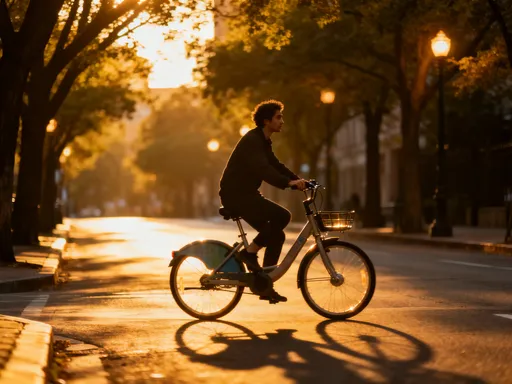
One of the most unexpected gifts of bike-sharing has been how it changed the way I see my city. Before, I stuck to the same few streets—the ones I knew, the ones that felt safe. I took the bus everywhere, eyes down, headphones in. But on a bike, everything slows down just enough to notice. I started seeing details: the flower shop with the bright purple awning, the bakery that opens at 6 a.m., the little bench by the river where an older couple feeds the ducks every Sunday. These weren’t tourist spots. They were life. And I was finally part of it.
As I rode more, my mental map of the city expanded. I discovered shortcuts through quiet alleys, parks I never knew existed, and that perfect coffee stand tucked behind the library. I began planning my errands differently—could I bike to the grocery store instead of driving? What about the post office, or my daughter’s school? The answer, more often than not, was yes. And each new route I mastered made me feel a little more capable, a little more at home.
There’s a quiet pride that comes with knowing your way around. It’s not about memorizing streets—it’s about feeling connected. I used to think only lifelong residents could navigate with ease. But now I realize that belonging isn’t about how long you’ve lived somewhere. It’s about how much you’ve explored, how many corners you’ve turned, how many small discoveries you’ve made. On a shared bike, I didn’t just move through the city. I became a part of it. And that shift—from visitor to participant—changed how I carry myself, not just on the bike, but in life.
Silent Collaboration: Riding a Shared System Built on Trust
Bike-sharing only works because of something invisible but powerful: trust. Not just in the technology, but in each other. Every time I return a bike and carefully lock it in the designated zone, I’m doing my part. And every time I find a bike neatly parked instead of tipped over on the sidewalk, I feel a small spark of gratitude. It’s a silent agreement between strangers: we’ll take care of this together.
I’ve started paying attention to these little acts of kindness. Like the time I found a bike with a note on the handlebars: “Seat’s loose—be careful!” Someone had taken a moment to warn the next rider. Or the woman who paused her ride to straighten three bikes that were blocking a doorway. I’ve even left a few notes myself—“Great bike! Smooth ride!”—just to spread a little positivity. These gestures don’t change the world, but they make the city feel kinder, more human.
It’s easy to assume that city life is impersonal, that no one looks out for anyone else. But bike-sharing has taught me otherwise. It’s a living example of how small, consistent actions create order out of chaos. When we return bikes properly, we’re not just following rules—we’re showing respect. When we report a broken seat or flat tire, we’re helping someone we’ll never meet. And when we choose to park considerately, even when no one’s watching, we’re practicing integrity. That kind of quiet responsibility builds something deeper than convenience. It builds community.
Conversations on Two Wheels: Unexpected Social Connections
I never expected to talk to people while riding a shared bike. I thought it would be a solo activity—just me, the road, and my thoughts. But the truth is, bikes are social magnets. Strangers wave. Kids point and smile. And sometimes, conversations happen in the most unexpected ways.
One rainy afternoon, I was struggling to get my bike started. The app kept saying “connection lost.” A man waiting nearby noticed and said, “Try moving it a foot to the left—sometimes the signal’s better there.” I did, and it worked. We both laughed. He told me he uses the bikes to visit his mother every weekend. I told him about my morning rides before work. We didn’t exchange numbers, but for a few minutes, we weren’t strangers. We were two people who understood the little frustrations and joys of this shared system.
Another time, I saw a teenager looking confused near a docking station. I stopped and asked if she needed help. She was trying to rent her first bike for a school project. I showed her how to scan the code, how to adjust the seat, and reminded her to take a photo when she returned it. Her face lit up when the bike unlocked. “Thanks, lady! You just saved my grade!” she called as she rode off. I stood there smiling, realizing that knowledge is meant to be passed on. These moments don’t happen every day, but when they do, they remind me that technology doesn’t have to isolate us. It can connect us, one small interaction at a time.
Building Self-Reliance One Ride at a Time
Riding a shared bike has become more than a way to get around. It’s become a practice in self-reliance. Every ride asks me to make decisions: Which route is safest? What if it starts raining? What do I do if the app fails mid-ride? At first, I wanted a guarantee—something that promised everything would go smoothly. But life doesn’t work that way. And neither does bike-sharing.
So I learned to adapt. I started carrying a small backpack with a raincoat, a snack, and my phone charger. I learned to check the weather before I left. I memorized backup routes in case a street was closed. And when things went wrong—like the time my bike died halfway up a hill—I figured it out. I walked it to the next station, reported the issue, and took another one. No drama. No panic. Just problem-solving.
These experiences have quietly shaped my confidence in other areas of life. At work, I’m more willing to speak up in meetings. At home, I’m better at handling unexpected changes—like last-minute school events or appliance breakdowns. I’ve even started saying “yes” to things I used to avoid, like joining a local walking group or trying a new recipe. The resilience I’ve built on the bike has spilled over into everything else. It’s not that I’m fearless now. It’s that I trust myself to handle whatever comes my way. And that, more than anything, has been the greatest gift of this journey.
More Than Transportation: A Journey of Quiet Transformation
Five hundred miles. Three apps. Dozens of rides. When I started, I thought I was just looking for a cheaper, greener way to run errands. I had no idea I was signing up for a personal transformation. This simple act of hopping on a shared bike has taught me to trust the process, trust others, and most importantly, trust myself.
It’s funny how something so ordinary—a 15-minute ride to the market—can carry such meaning. But it does. Each ride has been a small act of courage, a quiet decision to try, to explore, to keep going even when things don’t go perfectly. And over time, those moments added up. I’m more present. More confident. More connected—to my city, to the people in it, and to the woman I’m becoming.
Technology doesn’t have to be flashy or complicated to change your life. Sometimes, it’s the simplest tools—the ones that get you from one place to another—that end up taking you much further than you planned. They don’t just move your body. They shift your mindset. They remind you that growth happens in motion, that trust is built in small acts, and that you’re stronger than you think.
So if you’ve ever stood in front of a shared bike, heart pounding, wondering if you should try—do it. You might wobble at first. You might feel unsure. But keep going. Because somewhere between the first shaky pedal and the hundredth smooth ride, you’ll realize it was never just about the bike. It was about the journey. And you, my friend, are already on your way.